
Understanding the Difference: “1 of 5” Cards vs. “Qty: 5” Cards
Understanding the Difference: “1 of 5” Cards vs. “Qty: 5” Cards
When you’re collecting or minting NFTs on NFT-TradingCards.biz, you’ll often see two different ways a card’s edition size is represented —
either as “1 of 5, 2 of 5, 3 of 5…” or as a single card marked “Qty: 5.”
At first glance, they may look similar — but in the world of NFTs and blockchain minting, these two formats carry very different meanings for scarcity, ownership, and potential resale value.
Let’s break it down 👇
“1 of 5” – Individually Numbered Editions
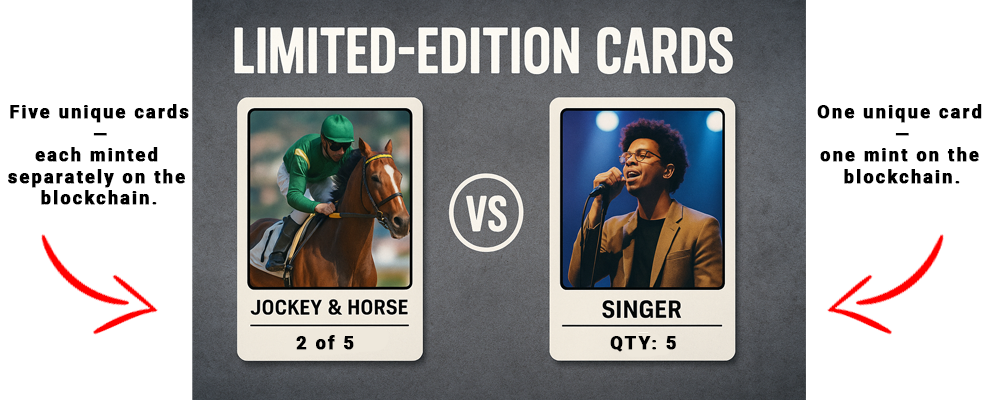
Cards labeled “1 of 5,” “2 of 5,” “3 of 5,” etc. are part of a limited series — each token is a unique, traceable mint tied to the same design or artwork.
On the blockchain, every card in this series is minted as a separate NFT, each with its own token ID and verifiable ownership history.
Why It Matters:
- Each card is its own digital asset, giving collectors true ownership of a specific number in the series.
- “Low-numbered” cards (like 1 of 5 or 2 of 5) often carry premium resale value because collectors love scarcity and position.
- Every transfer, sale, or trade is tracked individually — creating a transparent, verifiable chain of ownership.
Example:
If an athlete mints 5 cards labeled “1 of 5” through “5 of 5,” those are five distinct NFTs — all identical in design, but individually numbered and authenticated.
“Qty: 5” – A Single Token with Shared Copies
Now compare that to a card marked “Qty: 5.”
This means there are five total editions of the same NFT, but they share the same token type and metadata, making them part of a fungible batch.
Instead of minting five unique NFTs, the creator mints one NFT with a quantity of five available — similar to having five identical copies of a trading card in a single inventory slot.
Why It Matters:
- Easier for creators minting larger runs (like fan giveaways or charity sets).
- Collectors can own a copy of the card without worrying about specific numbering.
- Transactions focus on availability rather than serial exclusivity — making it ideal for mass engagement drops.
Example:
If a musician releases a card marked “Qty: 5,” all five editions share the same attributes, same rarity tier, and identical metadata. They’re part of a single mint with shared ownership structure rather than individual token histories.
Comparing the Two
| Feature | “1 of 5” | “Qty: 5” |
|---|---|---|
| Mint Type | Individually numbered NFTs | Shared quantity under one NFT ID |
| Blockchain Record | Each card has a unique token ID | One token type, multiple editions |
| Collector Appeal | Higher for low-numbered cards | Broader, casual collector base |
| Resale Value | Can vary by serial number | Typically consistent across editions |
| Use Case | Limited runs, rare series, elite drops | Standard collections, giveaways, or fan access cards |
Which Should You Choose?
If you’re a creator, think of it this way:
- Choose “1 of 5” when you want collectible exclusivity — each card is a statement piece.
- Choose “Qty: 5” when your goal is accessibility and engagement — perfect for community drops or rewards.
If you’re a collector, it comes down to your style:
- Want rarity and bragging rights? Go for the numbered editions.
- Want to support more creators or collect multiple pieces affordably? Go for quantity-minted cards.
The Bottom Line
Both formats — “1 of 5” and “Qty: 5” — have a place in the NFT-TradingCards.biz ecosystem.
The difference isn’t just in the text printed on the card — it’s in the minting structure, ownership model, and collector psychology behind it.
Whether you’re minting as a creator or collecting as a fan, understanding these distinctions helps you make smarter decisions, appreciate true scarcity, and trade with confidence in the new era of digital collectibles.