
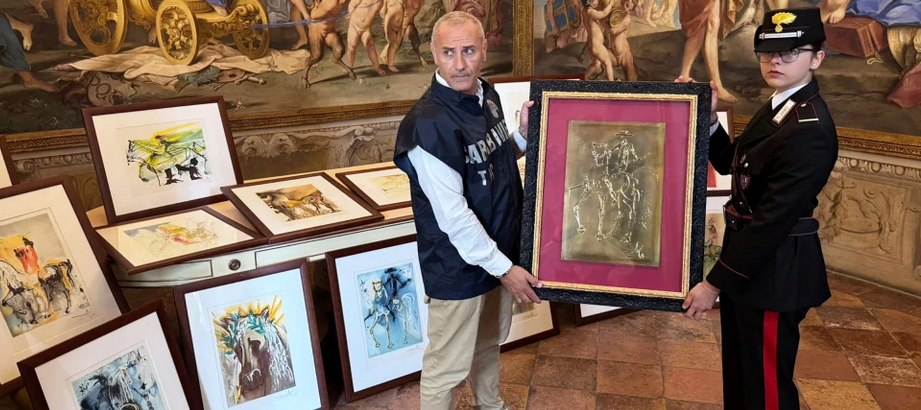
Police raided a Dalí exhibition in Italy and claimed many works were fakes. This is common in the art world — authenticity is hard to prove, provenance records can be forged, and buyers often rely on trust instead of hard data.
How Blockchain Could Help
- Immutable Provenance Records
- Each artwork (physical or digital) could be registered on a blockchain at the moment of authentication.
- Every transfer of ownership, exhibition loan, or sale is logged as a permanent, tamper-proof record.
- This prevents fake provenance documents from being inserted later.
- NFT Certificates of Authenticity
- Alongside the physical artwork, an NFT (non-fungible token) acts as its digital twin.
- The NFT can contain metadata: high-resolution images, expert authentication notes, exhibition history, and artist signature hashes.
- Anyone can instantly verify whether the artwork in front of them matches the NFT record.
- Exhibition Verification
- Museums and galleries could only accept artworks with verifiable blockchain certificates.
- Before an exhibit opens, the institution and the public could scan the QR code tied to the NFT certificate to confirm legitimacy.
- Fraud Prevention in Real Time
- If someone tried to pass off a fake Dalí, the lack of a valid blockchain record would immediately expose it.
- No more waiting for police raids or expert disputes after the fact.
🔹 Real Example
Some modern artists and foundations (like Picasso’s heirs and Beeple for digital art) are already using NFTs and blockchain certificates to ensure provenance. If Dalí’s estate had issued NFT-linked certificates for authentic works, the fakes in Italy could never have been exhibited as “real.”
In short: Blockchain turns art provenance into an unbreakable digital paper trail. The exhibition in Italy could have been prevented if all legitimate Dalí works had verifiable blockchain records — the fakes would have had nowhere to hide.