
Understanding the New Money Revolution
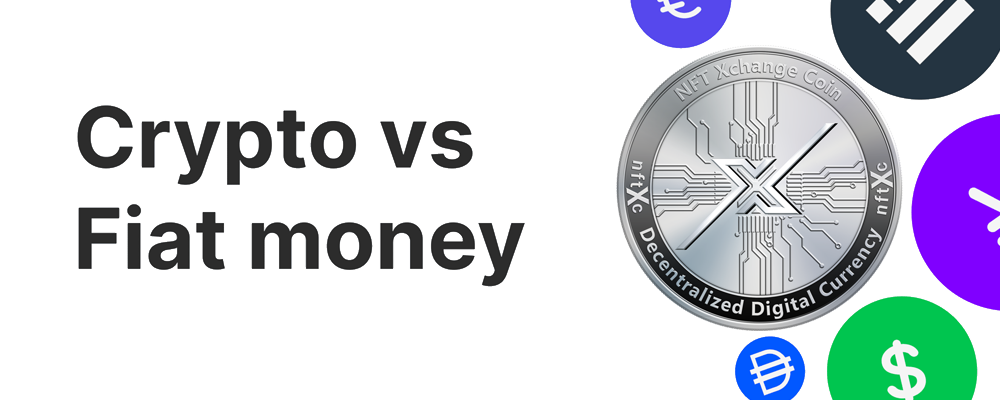
💱 Crypto vs. Foreign Currency
Money has always evolved — from gold to paper, from cards to digital — and now, from currencies controlled by governments to currencies powered by code.
At first glance, cryptocurrency and foreign currency (like dollars, euros, or yen) might seem similar — both can be used for transactions, both hold value, and both are traded globally.
But under the surface, they couldn’t be more different.
What Is Cryptocurrency?
A cryptocurrency is a digital asset that runs on blockchain technology, a decentralized ledger that records every transaction publicly and permanently.
Instead of being issued by a government or central bank, cryptocurrencies are created and maintained by code, miners, and community consensus.
Each coin — whether it’s Bitcoin, Ethereum, or $nftXc — operates under transparent rules set by its network, not political or financial authorities.
✅ Key Traits:
- Decentralized: No single entity controls it.
- Borderless: Works across countries instantly.
- Transparent: Every transaction is traceable on the blockchain.
- Programmable: Coins can have built-in utilities (like staking, governance, or NFT marketplace use).
What Is Foreign Currency?
A foreign currency is money issued by a nation’s central authority — like the U.S. dollar (USD), the euro (EUR), or the Japanese yen (JPY).
It’s regulated, backed by national debt and policy, and represents a country’s economic strength.
✅ Key Traits:
- Centralized: Controlled by governments and central banks.
- Nationalized: Each currency is tied to a specific economy.
- Inflationary: Supply changes based on policy and demand.
- Limited Reach: Requires conversion for cross-border transactions.
The Core Difference
| Aspect | Cryptocurrency | Foreign Currency |
|---|---|---|
| Issuer | Decentralized network | Central bank |
| Supply Control | Capped or algorithmic | Government policy |
| Value Basis | Market trust and adoption | National economy |
| Transparency | Public blockchain | Centralized banking systems |
| Transfer Speed | Minutes or seconds | Days (via banks and intermediaries) |
| Use Case | Digital payments, NFTs, DeFi, governance | Trade, finance, physical goods |
The Convergence of Two Worlds
Today, the line between crypto and fiat is blurring.
Cryptocurrencies like $nftXc aren’t just speculative assets — they’re utility tokens powering real ecosystems.
They enable marketplaces, creator economies, and cross-border participation in ways that traditional currency can’t match.
Meanwhile, traditional financial systems are adapting — introducing CBDCs (Central Bank Digital Currencies) and blockchain-inspired tools to stay relevant.
The Future of Value Exchange
The difference between crypto and foreign currency isn’t about which one is better — it’s about purpose.
Foreign currency moves through banks.
Crypto moves through communities.
And in the age of Web3, the power to mint, trade, and own value is shifting from governments to individuals.